Resources · Graphic Design
Graphic Design Services: The 7 Types and What They Cost (2026)

By Christopher
December 24, 2024 · Updated August 16, 2026 · 8 min read
Graphic design services cover seven types of work that businesses actually buy: brand identity, web and UI, marketing and advertising, motion, packaging, publication and presentation, and illustration. This guide reframes each one around what it costs to buy, how companies usually get it, and when it makes sense to hand it to one team instead of hiring separately for each.
Short answer. Most small and mid-sized businesses need three or four of the seven on a regular basis. Buying them one freelancer at a time is the most expensive way to do it. A dedicated subscription team covers the recurring types under one flat monthly rate, and you bring in a specialist studio only for the rare, once-in-years pieces.
The seven graphic design services and how businesses buy them
| Service | What you receive | How it is usually bought | How often you need it |
|---|---|---|---|
| Brand identity | Logo system, type, color, usage rules | One-off project with a studio or agency | Rarely |
| Web and UI design | Page layouts, components, handoff files | Project, then ongoing iteration | Occasional, then continuous |
| Marketing and advertising design | Ads, landing pages, social sets, emails | Retainer, subscription, or in-house | Weekly |
| Motion graphics | Animated ads, titles, explainers, cutdowns | Per project or as part of a creative plan | Weekly to monthly |
| Packaging design | Dielines, artwork, print-ready files | Specialist project | Per product launch |
| Publication and presentation | Decks, reports, ebooks, one-pagers | Freelance or subscription | Monthly |
| Illustration | Custom art, icon sets, spot illustration | Freelance or subscription | Campaign driven |
What each graphic design service costs to buy
1. Brand identity design
The most project-shaped of the seven. Studios scope it as a fixed engagement because it includes research and a system, not a file. Buy it once, then treat everything after as application work, which is where a monthly team is cheaper than the studio that built it.
2. Web and UI design
Priced as a project for the initial build, then as ongoing iteration. If your site changes every month, the iteration bill outgrows the build. See how we handle web and digital design on a plan.
3. Marketing and advertising design
The highest-volume category and the one that breaks freelance arrangements first, because demand is uneven. This is capacity work, so it is priced by capacity. Details on marketing and advertising design.
4. Motion graphics and animation
Usually the most expensive line when bought per asset, and the first thing teams drop when budgets tighten. Under a plan it competes for the same hours as static work, which is what makes it affordable to run continuously.
5. Packaging design
Genuinely specialist, with print production knowledge attached. Buy this from a packaging studio when the stakes are high, and use your ongoing team for the marketing assets that follow the launch.
6. Publication and presentation design
Decks, reports and ebooks are steady, unglamorous and constant in B2B. Perfect subscription work. See presentation design.
7. Illustration and custom visuals
Bought per piece from freelancers, or included when your team already has an illustrator on it. See illustration and artwork.
How to get all seven from one team
Hiring separately for each discipline means separate contracts, separate briefs and seven versions of your brand. The alternative is one team that already holds your files and your preferences.
If you need ongoing creative, here is how the Flocksy model works
Flocksy is a dedicated subscription team. You get the same designer, video editor, motion editor and illustrator on your account, with copywriting support on request, so nobody has to relearn your brand every time you send work in. Between them they cover six of the seven types above, with packaging design being the one that is often better bought from a specialist studio.
- Flat monthly plans. Plans are sold in daily creative hours, from 2 to 10 daily hours, and start at $1,199/mo, billed annually ($1,699/mo on monthly billing).
- Hours bank. Time you do not use rolls over for 30 days, so a quiet week pays for a heavy one.
- Senior help as you scale. A Production Coordinator is included on 4+ Daily Hour plans and an Art Director joins on 6+ Daily Hour plans.
- Every minute tracked. The portal shows what the plan bought, request by request.
- Cancel anytime. Access continues through the end of your current billing cycle.
If you are weighing outsourcing against hiring, our ManyPixels vs Flocksy and Penji vs Flocksy comparisons show how subscription providers differ in scope.
Frequently asked questions
How much do graphic design services cost for a small business?
One-off project work is priced per deliverable, so costs move with scope. Ongoing work is priced as capacity: subscription creative teams in this market publish monthly rates, and Flocksy plans start at $1,199/mo, billed annually for 2 Daily Hours.
Should a small business outsource graphic design or hire?
One hire covers one discipline. If you need static design, video and motion in the same month, outsourcing to a multi-discipline team covers more ground for a predictable monthly cost.
Which graphic design services do most businesses actually need?
Marketing and advertising design, presentation and publication design, and motion. Brand identity and packaging are project work you buy far less often.
The seven types of graphic design in depth
Graphic design is not one job. It is a group of related specialties, and the reason that matters is practical: the person who designs a beautiful logo is often not the right person to build a 30-slide sales deck or animate a product explainer.
Below are the seven types of graphic design businesses actually buy, what each one is for, what you typically receive, and how to tell which one your current project needs.
1. Brand identity design
What it is: the visual system that makes a company recognizable - logo, color palette, typography, imagery style, and the rules for using them.
You usually receive: a primary logo and variations, color and type specifications, and brand guidelines.
Buy it when: you are launching, repositioning, or your materials no longer look like they come from the same company.
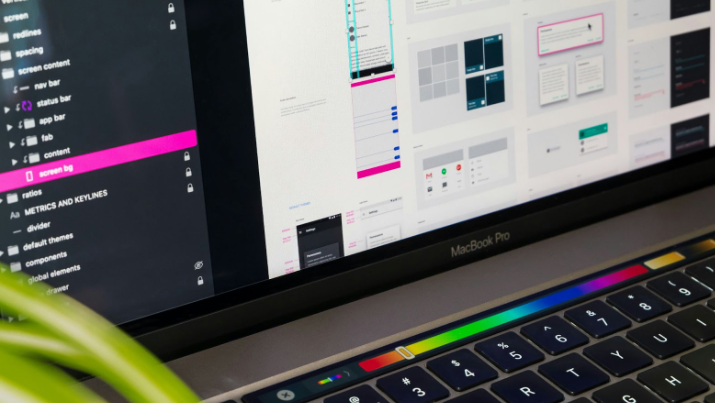
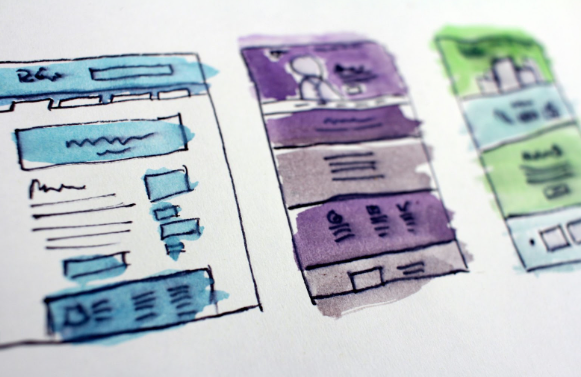
2. Web and UI design
What it is: the design of screens people use - websites, apps, dashboards, checkout flows.
You usually receive: page designs, responsive layouts, component states, and a handoff file a developer can build from.
Buy it when: the goal is a task getting completed, not just something looking good. Conversion problems are usually design problems.
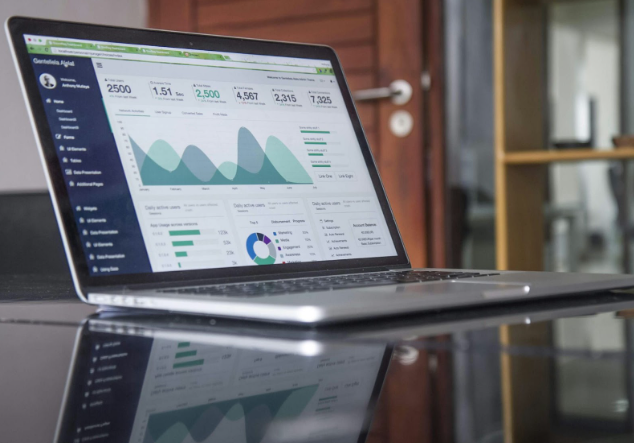
3. Marketing and advertising design
What it is: the highest-volume category for most businesses - ads, landing page graphics, social posts, email headers, one-pagers, event collateral.
You usually receive: sized variants of the same idea across every placement, in the aspect ratios each platform needs.
Buy it when: you are running campaigns. This is the work that never stops, which is why it is the category most often outsourced to an ongoing team rather than commissioned project by project.
4. Motion graphics and animation
What it is: design that moves - animated logos, explainers, kinetic type, product walkthroughs, social video graphics.
You usually receive: exported video in several ratios and lengths, often with and without captions.
Buy it when: you need to explain something quickly or stop a scroll. Motion consistently outperforms static in feeds, and it is a distinct skill from static design - a strong motion editor is a different hire.
5. Packaging design
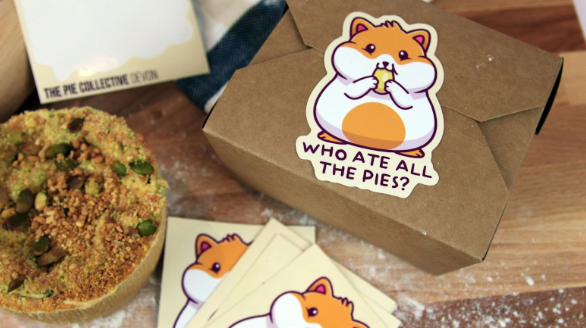
What it is: the design of the physical product experience - structure, labeling, dielines, print-ready artwork.
You usually receive: print-ready files built to a manufacturer's specification, plus mockups.
Buy it when: you sell a physical product. This category has real technical constraints; a designer without print experience will cost you a production run.
6. Publication and presentation design
What it is: long-form layout - reports, whitepapers, pitch decks, catalogs, ebooks.
You usually receive: a designed document plus an editable template your team can reuse.
Buy it when: the document has to carry credibility. Fundraising decks and sales collateral are judged visually in the first five seconds, fairly or not.
7. Illustration and custom visuals
What it is: original artwork - spot illustrations, characters, icon sets, editorial images, infographics.
You usually receive: vector or raster artwork in the formats you need, plus source files.
Buy it when: stock photography makes you look like everyone else. Illustration is the fastest way to make a generic category feel like a specific brand.
Which type does your project need?
- People do not recognize us: brand identity.
- Traffic arrives and leaves: web and UI.
- Campaigns need assets weekly: marketing design.
- Nobody understands the product: motion graphics.
- We sell something physical: packaging.
- We need to look credible on paper: publication and presentation.
- Everything looks like stock: illustration.
Do you hire seven specialists?
Almost nobody needs all seven at full-time volume, and almost every growing company needs several of them in the same month. That is the gap most teams get stuck in: too much work for one generalist, not enough of any single type to justify a specialist hire.
Three ways businesses solve it:
- One in-house generalist. Fast context, capped by one person's range and one person's hours.
- Freelancers per specialty. Right skill each time, but sourcing, briefing, and quality control land on you every project.
- A dedicated multi-discipline team. One relationship, several specialists.
That last model is what Flocksy provides: a dedicated designer, video editor, motion editor, and illustrator - with copywriting support on request - who all work from the same brand profile. Plans are built on daily creative hours, 2 to 10 daily hours, starting at $1,199/mo, billed annually or $1,699/mo billed monthly. Unused hours roll over for 30 days, a Production Coordinator is included on 4+ Daily Hour plans, an Art Director joins on 6+ Daily Hour plans, and you can cancel at the end of your current billing cycle.
Frequently asked questions
What are the main types of graphic design?
Brand identity, web and UI, marketing and advertising, motion graphics, packaging, publication and presentation, and illustration. Most commercial projects fall into one of those seven.
Which type of graphic design is most in demand?
Marketing and advertising design, because campaigns need new assets continuously, with motion graphics close behind as video placements keep growing.
Can one designer cover every type?
Rarely at a high standard. Most experienced designers are strong in two or three and competent in the rest, which is why teams with mixed needs usually work with a small multi-discipline group rather than a single generalist.
From the studio
Want this handled for you?
A dedicated designer, video editor, motion editor, and illustrator who learn your brand and ship work every business day. Flat monthly rate. Banked hours roll over for 30 days. Cancel anytime.
Keep reading
All resources →
Graphic Design
Why Every Business Needs a Logo (and How to Get One That Defines Your Brand)
Graphic Design
Benefits of Good Graphics for Social Media

Graphic Design
Unlimited Custom Illustrations: A Smarter Way to Stand Out Visually

Graphic Design