Resources · Marketing
Producing ad creative at volume with AI in the loop

By Flocksy Staff Writer
November 10, 2026 · 6 min read
More ad creative each week comes from a modular concept system, not from generating more images. Fix one argument per concept, then vary the hook, the format and the placement around it. Teams that skip the system end up with a feed full of near-identical ads that tire out at the same time.
Below is a Monday-to-Friday production cadence built on that idea, followed by a variant matrix that shows one concept expanded across hooks and placements.
Run ad production on a weekly cadence
| Day | What happens | Who owns it | Where AI helps |
|---|---|---|---|
| Monday | Read last week's results by concept, not by individual ad. Decide which concepts to keep, extend or retire. | Performance or marketing lead | Summarizing results and grouping ads by concept |
| Tuesday | Write one new concept or angle, plus the brief for any concept being extended. | Strategist or copywriter | Drafting hooks and headlines, and finding the words customers use in reviews |
| Wednesday | Design the master version of each new concept. | Designer or video editor | References, image cleanup and background extension |
| Thursday | Expand each master into variants across hooks, formats and placements. | Designer or video editor | Resizes, reframes and copy swaps from approved lines, including a platform's built-in AI tools |
| Friday | Review every variant for brand, claims and specs, then launch. | A named approver | Spec checks, file naming and upload preparation |
The rhythm matters more than the exact days. Results come in, decisions follow, new work gets made, and everything is reviewed before it launches. Skip a day and the next week starts behind.
One concept, expanded into a variant matrix
Here is how one concept expands. The example is a fictional meal-kit brand whose argument is that dinner is decided before you get home. That argument stays fixed in every cell. Only the hook and the placement change.
| Hook | Feed (square image) | Stories and Reels (vertical video) | Display (landscape image) |
|---|---|---|---|
| Problem | "Nobody knows what is for dinner again." Copy over an open, empty fridge | A phone lights up with "What's for dinner?" and cuts to the box arriving | An empty plate beside one line of copy |
| Outcome | "Dinner, decided." Copy over a finished plate | Unboxing to a plated meal in one continuous shot | A plated meal beside one line of copy |
| Proof | A customer review quote set over the meal | A customer talking to camera about their week | A review quote beside the box |
| Objection | "Too busy to cook?" Copy over a recipe card with three short steps | Hands following the recipe card from start to finish | A close-up of the recipe card |
Each row is a different way into the same argument. Each column is the same idea fitted to a placement. Test the rows against each other first. The columns are adaptation, not a test.
Hold the argument constant and vary how you express it
A concept is one argument for why someone should buy. Hold the argument constant, along with the offer, the core claim, the brand look and the product. Vary the expression: the hook in the first line or the first seconds, the visual, the format and the placement. That separation is what makes results readable. When an ad wins, you know which change did it.
How many variants are enough before it becomes noise?
There is no universal number, because it depends on your budget and on how many people each ad reaches. Enough is the number your spend can give a fair read. If budget is spread so thin that no variant gets a clear result, you have produced noise, not a test.
A practical rule: start with fewer variants that are genuinely different, and add more only once one is clearly working. More near-copies of the same idea do not tell you anything new.
Test the hook before you test the color
Test the biggest differences first. The angle and the hook decide whether anyone stops scrolling, so test them before the button color, the background or the font. Once a hook is clearly winning, test smaller refinements inside it.
The common failure is ads that look different but argue the same thing
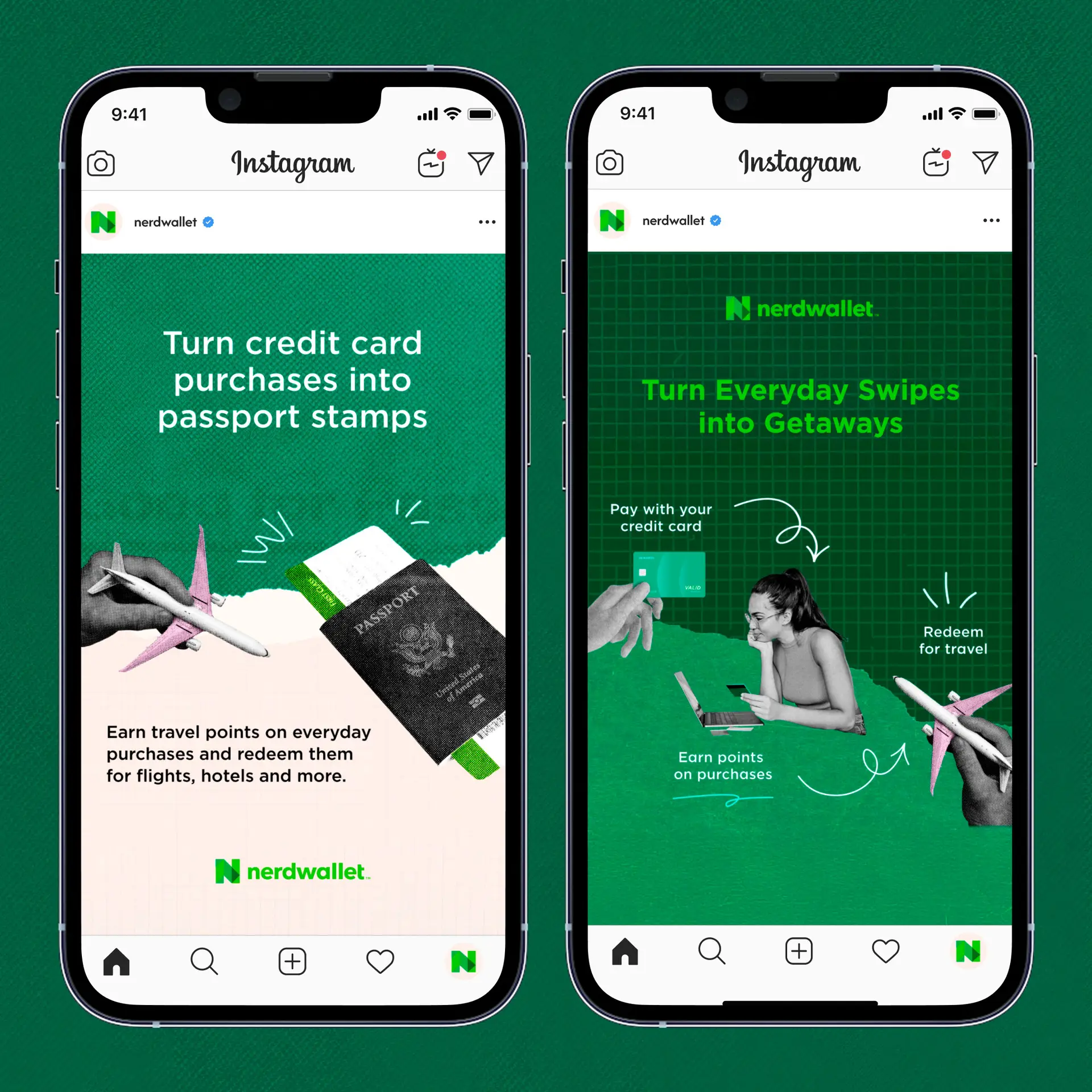
This is the specific trap with AI variants. Generating many versions of an ad with different backgrounds, colors and models is easy. The versions look different, but they all make the same argument in the same words. The audience experiences them as one ad, and it tires of all of them at once.
Real variety comes from different reasons to care: a problem, an outcome, proof from a customer, an answer to an objection. AI can produce the visual versions of each reason. A person has to come up with the reasons.
AI fits best on Thursday
Once a master version is approved, AI tools, including a platform's built-in AI tools, can produce size variants, background alternatives and copy swaps from approved lines. On Tuesday, AI helps with drafts of hooks and with finding the words customers use in reviews. It should not decide the argument, and every variant still goes through the Friday review.
To keep that volume on brand, read how to keep AI-generated creative on brand. For the full production process behind each concept, read the AI creative workflow.
The cadence only works if someone is staffed to it
The cadence breaks in the first week nobody has time for Wednesday and Thursday. It only holds if someone is staffed to it every week, which is the gap a dedicated Flocksy creative team fills.
For ad formats and examples, see marketing and advertising design and social media design, or browse client work.
Frequently asked questions
How do you produce more ad creative without hiring?
Build a modular concept system and run it on a weekly cadence. Fix one argument per concept, then vary the hook, format and placement around it. Use AI for repetitive work such as resizes, reframes and copy swaps from approved lines, and keep a named person responsible for the argument and for approving every variant before launch.
What is a modular ad concept?
A modular ad concept is one fixed argument for why someone should buy, built so its parts can be swapped. The offer, the core claim, the brand look and the product stay constant, while the hook, visual, format and placement change. Because only one layer changes at a time, test results show which change made an ad win.
How many ad variants should you test?
There is no universal number. The right count is however many variants your budget can give a fair read. If spend is spread so thin that no variant gets a clear result, the test produces noise. Start with fewer variants that are genuinely different, then add more once one of them is clearly working.
What should you test first in ad creative?
Test the biggest differences first: the angle and the hook. They decide whether someone stops scrolling, so they usually matter more than the button color, the background or the font. Once one hook is clearly winning, test smaller refinements inside it, such as the visual, the headline length or the call to action.
Can AI tools create ad variations?
Yes, for the visual and format layer. AI tools, including a platform's built-in AI tools, can generate background alternatives, size variants and copy swaps from an existing ad. They do not create genuinely different arguments, so ads made only this way tend to look different while saying the same thing, and they tire out together.
From the studio
Want this handled for you?
A dedicated designer, video editor, motion editor, and illustrator who learn your brand and ship work every business day. Flat monthly rate. Banked hours roll over for 30 days. Cancel anytime.