Resources · Graphic Design
Can AI replace a graphic designer?

By Flocksy Staff Writer
November 10, 2026 · 7 min read
Not for the whole job, but for some tasks it already can. Resizing, background removal and copy variants of an approved message are fine with a quick human check. Icons, infographics and deck polish come out as a starting point that still needs a designer. Logos, brand systems and print-ready files should stay with a designer from the start.
The table below sorts fifteen common design jobs into those three bands. The jobs are listed alphabetically, so the order is not a ranking.
The verdicts are our editorial judgment about how current AI tools handle each job for a business publishing under its own brand. They are not the results of a test. For an outside view, Lica's GraphicDesignBench, published in April 2026, evaluated AI models on tasks drawn from real design templates. Its authors report that models "handle high-level semantic tasks, but break down sharply once precision, structure, and multi-element composition enter the picture." That pattern is consistent with the bands below, but the table is our judgment, not their result.
Which design tasks AI can handle, task by task
| Task (alphabetical) | Our verdict | Why |
|---|---|---|
| Ad copy variants | Fine with a quick check | Rewording an approved message for different lengths and hooks is a strength. A person checks claims, tone and anything regulated. |
| Background removal | Fine with a quick check | Reliable on clean product shots. Check edges, hair, glass and anything semi-transparent. |
| Brand system | Keep it human | A system is a set of linked decisions about type, color, layout and voice. AI produces pieces that look plausible alone and do not hold together. |
| Deck polish | Starting point only | AI aligns elements and suggests layouts. The hierarchy, the story of the deck and the data visuals need a designer. |
| Editorial illustration | Keep it human | The value is a specific idea in a consistent style across a series, and that consistency is where AI output wanders. |
| First-pass icon set | Starting point only | Icons arrive quickly, but stroke weights, grids and metaphors rarely match across the set. |
| Image cleanup and retouching | Fine with a quick check | Removing objects, dust and distractions works well. Check that products, faces and text are unchanged. |
| Infographic from a spreadsheet | Starting point only | AI can propose a layout. Every number, label and scale needs checking, and the hierarchy usually needs rebuilding. |
| Landing page layout | Starting point only | Useful for exploring wireframes. Conversion hierarchy, brand fit and accessibility need a designer. |
| Logo | Keep it human | A logo has to be distinctive, ownable and usable at every size. AI tends toward familiar shapes, and ownership is unclear. |
| Mood boards and references | Fine with a quick check | Fast, broad exploration is exactly what AI is good at. A person curates what goes forward. |
| Print-ready packaging | Keep it human | Dielines, bleed, color profiles and required label text leave no room for near misses. |
| Product photo scenes | Starting point only | AI can place a product in a new setting, but labels, proportions and reflections often distort. |
| Social post resizing | Fine with a quick check | Adapting an approved design to new formats is repetitive work AI handles well. Check crops and text-safe areas. |
| Trade show booth graphics | Keep it human | Large-format files expose every flaw, and the specs vary by venue and printer. |
Why some jobs are fine with a quick check
The jobs in the first band have one thing in common: the creative decision has already been made. The message is approved, the design exists, or the job is mechanical, such as cutting a product out of its background. AI is executing a variation, not deciding anything.
The quick check still matters. A resized post can crop the product out of the frame, a copy variant can drift into a claim you cannot support, and a cleaned-up photo can quietly change a label. Someone who knows the brand should look at each piece before it goes out. Looking takes far less time than making the piece did.
Why some jobs only get you a starting point
In the second band, AI gets the rough shape right and the details wrong. An icon set arrives fast, but the line weights do not match. An infographic layout looks finished, but a bar is out of scale or a label is wrong. A product scene is convincing until you notice the logo on the box has melted.
The trap is cost. Fixing a near miss often takes longer than briefing the job properly in the first place, because a designer has to find every flaw before fixing it. Use AI here to explore directions quickly, then give the chosen direction to a designer with a clear brief.
Why some jobs should stay human
The third band is where buyers get burned. Two issues come up again and again: keeping a brand consistent across a whole system, and owning what you publish.
Consistency across a system
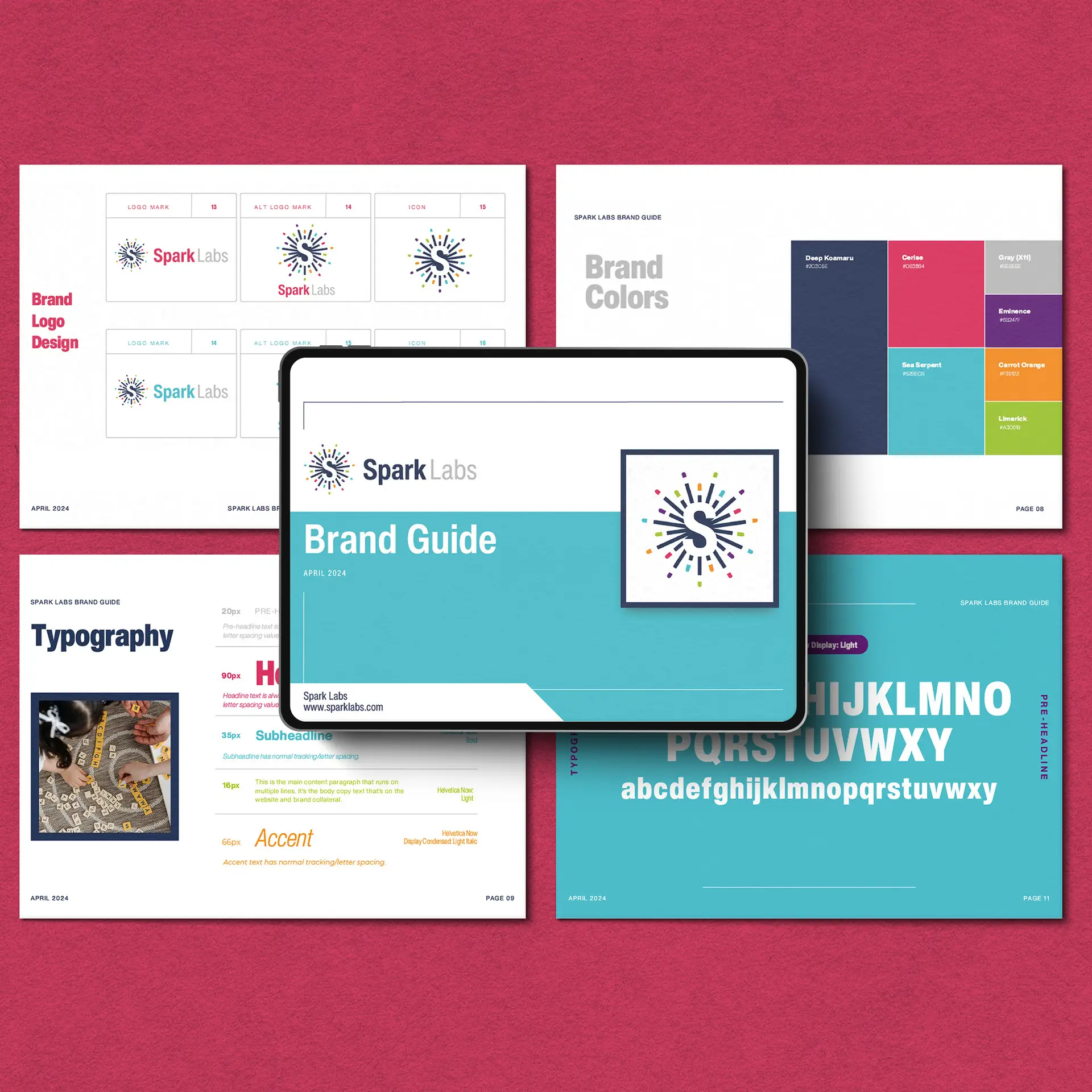
A brand system is a set of decisions about how every piece relates to every other piece: which typeface does which job, how color carries meaning, how much space a logo needs. AI generates each output on its own. It can make one convincing poster. It struggles to make the next piece, and the one after that, still clearly belong with the first.
This is the work a Flocksy creative team is built for, because the designer who builds your system is the same person who extends it, piece after piece.
Ownership of AI-generated work
Ownership is the second issue. In January 2025, the US Copyright Office published part 2 of its report on copyright and artificial intelligence, which covers copyrightability. The Office concluded that copyright "does not extend to purely AI-generated material, or material where there is insufficient human control over the expressive elements," and that "prompts do not alone provide sufficient control."
The same report says human authors are entitled to copyright in their own work where it is perceptible in AI-generated output, and in the creative selection, arrangement or modification of that output. It also says that whether a human contribution is enough has to be assessed case by case. This paragraph describes the Office's published position and is not legal advice. Questions about a specific logo or campaign belong with a lawyer.
How to use the table if you are deciding whether to hire
Sort your own design requests from the last few months into the three bands. If most of the list sits in the first band, AI tools plus a careful reviewer may cover a large share of it. If most of it sits in the second and third bands, you need design capacity, whether that comes from a hire, a freelancer or a team.
That second situation is the one Flocksy is set up for: a dedicated creative team where AI accelerates the work and people finish it.
To see where these tasks sit in a full production process, read the AI creative workflow. To stop AI output drifting off brand, read how to keep AI-generated creative on brand. For identity work specifically, see branding and identity design.
Further reading: AI graphic design, an earlier overview of AI in graphic design.
Frequently asked questions
Can AI replace a graphic designer?
Not for the whole job. AI handles some defined tasks with a quick human check, such as resizing an approved design, removing backgrounds and drafting copy variants. It produces a starting point for icons, infographics and deck layouts. Logos, brand systems and print-ready files are better kept with a designer, because consistency and ownership matter most there.
What design tasks can AI do well?
AI does well on design tasks where the creative decision has already been made: resizing an approved design for new formats, removing backgrounds from clean product shots, cleaning up images, building mood boards and drafting copy variants of an approved message. A person who knows the brand should still check each piece before it is published.
Can AI design a logo?
AI can generate logo-like images quickly, which can help early exploration. A finished logo has to be distinctive, usable at every size and owned by the business, and AI output tends toward familiar shapes. The US Copyright Office has also said that purely AI-generated material is not protected by copyright, which makes ownership a real question for identity work.
Who owns AI-generated designs?
In its January 2025 report on copyrightability, the US Copyright Office concluded that copyright does not extend to purely AI-generated material, and that prompts alone do not provide sufficient control. Human authors can hold copyright in their own expression, and in their creative selection, arrangement or modification of AI output. This describes the Office's position and is not legal advice.
Is AI or a graphic designer better for a small business?
It depends on the mix of work, and the mix is easy to check. If most requests are resizes, simple variants and image cleanup, AI tools plus a careful reviewer can cover much of it. If the work includes a logo, a brand system, packaging or anything printed, a designer is the better choice, and AI becomes a tool the designer uses.
From the studio
Want this handled for you?
A dedicated designer, video editor, motion editor, and illustrator who learn your brand and ship work every business day. Flat monthly rate. Banked hours roll over for 30 days. Cancel anytime.